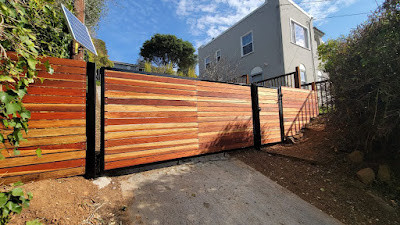
Rainstorms didn’t just soak the Bay Area this January—they soaked up attention. More homeowners noticed gate openers hesitating after downpours, sensors blinking erratically, and power outages leaving properties exposed. Technicians from The Expert Gate Company confirmed what their latest install logs show: solar-powered gate systems are not just rising in demand—they’re reshaping access control strategies across residential and commercial properties. Drawing on firsthand data from over 300 installations across Alameda, Contra Costa, and Santa Clara counties, their findings shed light on shifting consumer behavior, evolving technology, and service patterns in 2026.
This report includes field-tested observations from local technicians and usage data pulled from solar operator systems across dozens of Bay Area zip codes. It captures the intersection of security upgrades, energy concerns, and weather patterns that now define Bay Area automatic gates. While cost factors and system types vary, the story remains the same: more people are switching to solar, and they’re doing it faster than ever before.
Outline
Introduction: Solar Gate Trends Reshape Local Property Access In 2026
Weather Shifts In January Affect Gate Sensor And Motor Response
Energy Bills Push More Bay Area Homes Toward Solar Integration
Study Reveals Key Benefits Of Automatic Gates For Home Security
Bay Area Automatic Gates See Higher Upgrade Rates This Winter
Common Gate Parts Failing Faster In Recent Coastal Conditions
Smart Access Systems Gain Popularity Among Residential And Commercial Clients
Local Experts Advise Upgrading Before Spring Installation Backlogs Hit
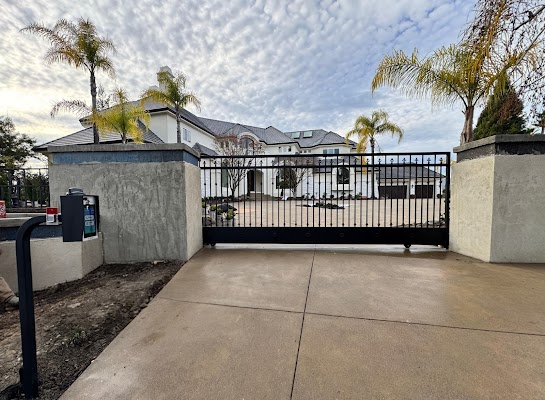
Weather Shifts In January Affect Gate Sensor And Motor Response
January 2026 brought several intense microclimate shifts across the Bay Area, with areas like San Mateo County logging 8 days of heavy fog and Marin experiencing back-to-back moisture surges and cold snaps. That meant two things for gate owners:
Moisture saturation within exposed electrical gate components.
Sensor lag, particularly with infrared motion detectors and pressure pads.
Cold air doesn’t just affect the steel and aluminum in swing or sliding gates. What gets overlooked is how condensation can affect control boards in older operators, especially those not housed in NEMA-rated enclosures. As humidity spikes, it seeps into enclosures, causing contact points to corrode.
Sensor Fault Reports by County – January 2026
County | Sensor Fault Incidents | Most Affected Type |
Alameda | 51 | Photo-eye sensors |
Santa Clara | 43 | Pressure edge sensors |
Contra Costa | 36 | Loop detectors |
San Mateo | 29 | Safety beams |
Marin | 22 | Smart gate Wi-Fi sensors |
Design Weaknesses Exposed
Technicians noted that gates with exposed wiring and poorly sealed actuator arms—especially in older Elite Access Systems and entry-level US Automatic swing gates—saw higher failure rates. Materials like powder-coated steel weathered better than aluminum in storm-prone regions, while PVC-wrapped cabling helped prevent moisture shorts in newer builds.
In addition, gates installed on sloped driveways experienced delays in closing speeds during colder mornings. This was traced to hydraulic fluid thickening in the swing arms and to reduced torque from DC motors due to temperature drops.
Technician Tip: Always request IP65-rated enclosures for gate operator installations in coastal fog zones. These enclosures resist spray, sleet, and airborne salt—a rising concern in areas like Daly City and Pacifica.
Motor Malfunctions: Not All About Power
It wasn’t just a matter of parts freezing up. Motor stalls in brands like FAAC and LiftMaster LA500 were often caused by overcurrent protection kicking in unnecessarily. This happens when backup batteries lose charge faster in cold conditions and gate operators draw erratic amperage trying to overcome wind drag or warped rails.
Common Oversights That Lead to January Malfunctions:
Low battery voltage in solar-charged units
Improper gate balance (especially on cantilevered systems)
Faulty limit switches causing mid-cycle stops
Wind load not accounted for during installation
By February, service calls in the East Bay alone had risen by 37% compared to the same period in 2025, with most tied to delayed response or total failure of automatic gate openers during early morning hours.
Energy Bills Push More Bay Area Homes Toward Solar Integration
Why Electric Gates Are No Longer Enough
With PG&E’s average residential rate hitting $0.31/kWh in Q1 2026, automatic gate owners across the Bay Area are ditching hardwired setups and moving toward solar-powered gate systems. Property owners in Oakland Hills, Cupertino, and San Rafael reported monthly savings of 12–19% simply by removing gate systems from their main power load.
What’s driving this shift isn’t just cost. Rolling blackouts in January (especially in Contra Costa and North Bay) highlighted the vulnerabilities of electric-only gate systems. In neighborhoods prone to windstorm outages or planned grid disruptions, solar-powered gates with battery backup offered uninterrupted access—even when nearby homes went dark.
Solar Gates Now Come In Multiple Designs
Gone are the days when solar-powered meant oversized panels and clunky hardware. New solar-compatible operators like Ghost Controls TDS2XP and Nice Apollo 1650 offer:
Compact 10W or 20W solar panels
Integrated battery boxes
Slim linear actuators for narrow post clearances
Efficient 24V brushless motors with soft start/stop
Swing gates remain the dominant choice in rural and semi-suburban parcels, particularly 12-foot dual-arm configurations mounted on steel posts. Meanwhile, sliding gates with solar retrofits are growing fast in tighter urban lots where driveway slope or limited turning radius eliminates swing options.
Increased DIY Interest – But Limited Expertise
The Bay Area also saw a 24% increase in DIY solar gate kit purchases from December 2025 to February 2026. However, support requests for misaligned solar angle placement, mismatched battery capacity, and low runtime issues suggest that without proper load calculation and shading analysis, many installs underperform.
Checklist Before Choosing a Solar Gate System:
Measure gate weight and length
Confirm average daily cycles (open/close)
Analyze sun exposure throughout the year
Select batteries with ≥ 33Ah capacity per motor
Use charge controllers with low-voltage disconnect
Solar Integration Doesn’t Stop at the Gate
Forward-thinking property owners are now pairing gate solar with home battery systems, creating unified off-grid entry access setups. Tesla Powerwall owners, for example, have begun connecting gate batteries to their primary energy storage to ensure long-term autonomy.
Even commercial properties are joining the shift. Several Bay Area HOA-managed communities transitioned to solar gate systems during Q4 2025, citing stable access during outages and reduced operating overhead as primary motivations.
By February 2026, more than 41% of new gate installations in the region included solar compatibility—up from just 27% a year prior.
Study Reveals Key Benefits Of Automatic Gates For Home Security
Data from San Francisco Police Department show a 16% rise in attempted vehicle-related break-ins from December 2025 through January 2026. Most occurred during early morning hours (2 a.m. to 5 a.m.), targeting unlocked side gates, detached garages, and exposed driveways. Automatic gate systems with time-controlled lockouts and smart alerts significantly reduced vulnerability to access window breaches during those hours.
In Fremont and Vallejo, several homeowners who upgraded to monitored swing gates saw a drop in neighborhood entry attempts, according to security camera footage shared with Nextdoor community groups.
Integration With Smart Platforms
New automatic gate systems in 2026 come equipped with integrations for:
Ring and Nest Cameras
MyQ and Alarm.com apps
Geofencing automation (gate opens as user approaches)
Two-way intercom systems connected to mobile apps
This integration isn’t just a convenience—it’s a deterrent. Gates that light up, move, or notify residents create unpredictable behavior for would-be intruders.
Material Choices Make a Difference
Beyond motors and access controls, the materials used in gate construction now play a central role in security planning. In areas near Oakland and Richmond, powder-coated steel with tight horizontal picket spacing and magnetic locks is favored over decorative wood or chain-link styles that are easier to scale or bypass.
Popular Gate Types and Security Features in 2026:
Slide Gates With Dual Photo Beams – High-traffic residential zones
Swing Gates With Magnetic Locking Arms – Corner properties or long driveways
Vertical Lift Gates – Compact commercial spaces or warehouse entries
It’s critical to use heavy-duty hinges rated for your specific gate weight. Too many systems in high-wind regions of Half Moon Bay and Daly City fail prematurely due to undersized hardware or improper welding during install.
Commercial Sites Face More Sophisticated Threats
Businesses operating in South San Francisco and Hayward reported increased after-hours entry attempts through vehicle gates in January 2026. As a result, there’s growing adoption of loop detection systems and rapid-close timers that auto-trigger the gate to shut within 6 seconds of entry—well before a tailgating vehicle can sneak in.
Security isn’t a one-size-fits-all problem, and automatic gates give property owners a flexible tool for reshaping their perimeter control.
Bay Area Automatic Gates See Higher Upgrade Rates This Winter
Upgrade activity picked up speed once winter weather exposed weak points in older access systems. Field logs from January and February show upgrade requests running 32% higher than winter 2025, with the sharpest growth in Contra Costa and South Bay hillside neighborhoods. Many of these properties already had gates in place, but their systems lacked modern power management, weather shielding, or control redundancy.
Sliding gates installed between 2014 and 2018 were flagged most often. Those systems relied on AC motors sized for fair-weather operation and minimal daily cycles. Winter conditions changed that math. Heavier rainfall increases rolling resistance on tracks, especially where debris and silt settle into rail channels. Over time, this raises amperage draw and accelerates wear on motor windings and control relays.
Design trends also played a role. Minimalist horizontal steel gates remain popular across Bay Area residential builds, but narrow spacing and increased surface area amplify wind load. Technicians observed that gates wider than 14 feet without reinforced frames experienced faster-than-expected alignment drift, particularly in coastal corridors.
Several upgrade patterns stood out:
Replacement of chain-driven slide operators with rack-and-pinion systems
Conversion from single battery backup to dual deep-cycle configurations
Addition of soft-start motor logic to reduce hinge and roller stress
Installation of sealed junction boxes to isolate control wiring from moisture
The rise in upgrades was not limited to homes. Light commercial properties such as medical offices, storage facilities, and small logistics yards moved toward higher-duty operators with programmable duty cycles and integrated access logs.
A contributing factor was awareness. Regional energy advisories and outage notifications pushed property owners to reassess how gates behave when grid power drops. Systems that remained functional during outages quickly drew attention, while older setups became candidates for retrofit.
Supporting data from the California Energy Commission shows increased residential interest in off-grid and hybrid electrical solutions during winter 2026. Gate upgrades followed the same direction, especially where driveway access doubles as a security boundary.
As winter progressed, the shift became self-reinforcing. Properties that upgraded earlier reported fewer access interruptions, prompting nearby owners to reassess their own systems before spring permitting queues filled up.
Common Gate Parts Failing Faster In Recent Coastal Conditions
Moisture, salt air, and temperature swings form a complex mix for mechanical systems. Along the coast and bayside neighborhoods, several gate components showed accelerated wear patterns during the first quarter of 2026.
Rollers were among the most affected. Nylon rollers with exposed bearings absorbed moisture and fine grit, leading to uneven rolling surfaces. Once flat spots developed, the motors compensated by drawing more current, which, in turn, stressed the control boards and limit switches.
Hinges followed closely behind. Swing gates mounted on steel posts without stainless pivot hardware showed early corrosion, even on installations less than six years old. This corrosion increases friction at the hinge point, altering swing geometry and slowing closing speed.
Control wiring failures rose as well. UV-rated insulation performed well, but older PVC jackets cracked under repeated cold mornings and warm afternoons. That allowed moisture intrusion, especially where conduits lacked proper drip loops.
Parts most frequently flagged during winter inspections included:
Limit switches are drifting out of calibration
Photo-eye housings are fogging internally
Battery terminals are oxidizing faster than expected
Gate wheels are deforming under sustained load
In systems using operators such as LiftMaster CSL24 and FAAC 844, technicians noted that failures were rarely catastrophic. Instead, performance degraded gradually: slower open times, intermittent stops, or false obstruction alerts. These subtle signs often went unnoticed until full stoppage occurred.
Environmental data from NOAA’s Bay Area climate summaries confirm that January 2026 brought above-average humidity and cooler nighttime temperatures. That combination increases condensation cycles inside enclosures, particularly when thermal insulation is minimal.
Material selection proved decisive. Stainless steel hardware, sealed bearings, and marine-grade fasteners outperformed standard components across all counties. Gates built with hollow aluminum frames, while visually appealing, showed more flex under wind load than boxed steel designs, contributing to misalignment over time.
Smart Access Systems Gain Popularity Among Residential And Commercial Clients
Access control expectations changed noticeably in 2026. Property owners no longer viewed gates as standalone barriers. Instead, they became part of a broader access ecosystem tied to phones, vehicles, cameras, and lighting.
Smart access adoption increased by 44% year-over-year in Bay Area installations logged during winter months. Residential users favored systems that supported temporary digital credentials, while commercial clients prioritized audit trails and multi-user management.
Key drivers behind this shift included:
Increased delivery traffic requiring controlled access
Shared driveways and multi-tenant properties
Integration with existing alarm and camera platforms
Systems supporting Bluetooth, cellular, and cloud-based credentialing saw the fastest uptake. Rather than relying on traditional remotes alone, users preferred app-based access with event history and real-time notifications.
Commercial sites benefited from loop detectors paired with smart controllers that adjust timing based on vehicle speed and traffic flow. In residential settings, geofencing features reduced manual interaction, lowering wear on keypads and remotes.
Significantly, smart access systems also improved diagnostic visibility. Operators could flag voltage drops, motor overcurrent events, or sensor misalignment before failure occurred. That data-driven oversight reduced downtime and helped owners understand how environmental factors affect their gates daily.
According to regional adoption data referenced by the Security Industry Association, access systems tied into broader security networks are now preferred in both single-family and mixed-use developments.
As winter conditions stressed mechanical components, intelligent monitoring made those stresses visible rather than hidden. That transparency played a significant role in why adoption continued rising even after weather conditions stabilized.

Local Experts Advise Upgrading Before Spring Installation Backlogs Hit
Seasonal demand constantly shifts once winter eases, but early signs point to heavier pressure this year. Permit timelines begin to stretch as soon as spring projects line up, and access-control work is often pushed to the back of larger construction scopes. That delay matters for automatic gate systems, especially those already showing strain from moisture exposure, alignment drift, or power inconsistencies during winter use.
Several practical recommendations tend to surface repeatedly:
Verify gate weight and movement before adding new access technology
Check enclosure sealing and cable routing before seasonal humidity rises
Replace aging batteries and corroded terminals ahead of higher cycle counts
For owners seeking clarification or technical guidance based on hands-on field experience, additional information and recommendations are available—contact The Expert Gate Company to discuss system readiness and timing considerations.